Korean BBQ Meatballs and Vegetables: A Flavor Explosion
I first stumbled upon the idea for these Korean BBQ Meatballs and Vegetables during a late-night craving for something comforting yet exciting. I was at my favorite Korean BBQ joint, inhaling the smoky, sweet aroma wafting from the grill, when I spotted a dish of meatballs that looked utterly irresistible. With their glossy glaze and vibrant veggies, they caught my eye immediately. I knew I had to recreate this dish at home—not just to satisfy my cravings without breaking the bank, but also to put my own spin on it!
Let me tell you, perfecting this recipe was no walk in the park. I spent a good week testing out different combinations of ingredients and cooking techniques—eight attempts in total (yes, eight!). Each round was filled with a mix of triumphs and kitchen disasters; at one point, I nearly created a meatball that could be used as a doorstop! But through each iteration, I was chasing the ideal balance of savory and sweet flavors, tender meatballs, and vibrant veggies that would make this dish worthy of sharing.
After all that trial and error, it was so worth it! The final result is a plate piled high with juicy Korean BBQ meatballs coated in a luscious sauce, paired with a colorful array of crisp-tender vegetables. Each bite is an explosion of flavor—sweet, spicy, and utterly satisfying. Plus, these meatballs hold up beautifully in the fridge for leftovers! I can’t wait for you to try this recipe; it’s perfect for family dinners or impressing friends. Let’s get cooking!
These Korean BBQ Meatballs and Vegetables are…
…a delightful explosion of flavor that will have your family coming back for seconds!
1. They deliver a savory-sweet harmony that’s simply unforgettable, thanks to a perfect balance of soy sauce and brown sugar in the Korean BBQ sauce. This combination not only enhances the meaty depth of the meatballs but also adds a mouthwatering glaze that caramelizes beautifully during cooking.
2. Juicy and tender texture – each meatball is incredibly moist, thanks to the use of ground beef combined with panko breadcrumbs and an egg. This mix creates a lightness that allows the meatballs to stay succulent while still achieving a satisfying bite.
3. A simple yet impactful technique is incorporating minced garlic and ginger into the meatball mixture. This step infuses each bite with aromatic flavors, elevating everyday ground meat into something special that transports you straight to a Korean BBQ restaurant.
4. Affordable homemade goodness – making these Korean BBQ Meatballs and Vegetables at home means you can enjoy restaurant-quality flavors without breaking the bank. With easily accessible ingredients, I found this recipe yields enough to feed a family or provide leftovers for lunch!
PS These meatballs are perfectly sized for easy serving and sharing, making them ideal for family dinners or gatherings!
Ingredients for the Korean BBQ Meatballs and Vegetables
Each ingredient in this dish plays an essential role in flavor and texture. Here’s what you’ll need:
1 pound ground beef (or ground pork): Provides a savory base packed with rich flavor.
1/2 cup bread crumbs (preferably panko): Adds lightness and helps bind the meatballs together.
1 large egg (beaten): Acts as a binder to hold the meatball mixture intact.
2 tablespoons soy sauce (low sodium): Enhances umami depth without overwhelming saltiness.
1 tablespoon sesame oil: Contributes a nutty aroma that complements the other flavors.
2 cloves garlic (minced): Infuses the meatballs with a fragrant, savory punch.
1 teaspoon ginger (grated): Adds warmth and a subtle spiciness to balance the sweetness.
1/4 cup green onions (chopped): Brings freshness and a mild onion flavor to the mix.
1 teaspoon black pepper: Provides a gentle heat that enhances overall taste.
1 cup bell pepper (sliced): Offers sweetness and a vibrant crunch for texture contrast.
1 cup zucchini (sliced): Adds moisture and a tender bite to the vegetable medley.
1 cup carrots (sliced): Introduces natural sweetness and color to brighten the dish.
2 tablespoons olive oil: Helps sauté the vegetables while adding richness.
1 teaspoon salt: Balances flavors and enhances the natural taste of the ingredients.
- 1 teaspoon pepper: Elevates the vegetable flavors with additional warmth.
The Meatballs Must Be Mixed Well. Trust Me!
I know, I know — mixing meatballs might sound like a simple step, but I tried to cut corners by rushing through it, and let me tell you, it was a disaster. The meatballs turned out dry and crumbly, and I ended up wishing I had taken the time to mix everything properly. Lesson learned: there are no shortcuts in the world of meatballs!
When you mix the ingredients thoroughly, you’re essentially creating a cohesive mixture that allows the flavors to meld together beautifully. Think of it like making a good dough for pizza; if you don’t knead it enough, it won’t hold together or rise properly. The same goes for your meatballs — if they aren’t mixed well, you’ll end up with uneven flavor and an unappetizing texture.
What does mixing do?
- Flavor integration — Thorough mixing ensures that each meatball is infused with all the flavors from the soy sauce, garlic, ginger, and green onions.
- Texture improvement — A well-mixed batter leads to tender meatballs; they hold together without falling apart during cooking.
- Moisture retention — Mixing well helps distribute moisture evenly from the egg and sesame oil, preventing dry patches in your meatballs.
- Uniform cooking — When all ingredients are combined properly, the meatballs cook evenly, reaching that perfect internal temperature throughout.
- Binding strength — The bread crumbs absorb moisture and help bind everything together; adequate mixing activates their potential as a binding agent.
Different mixing times
- 1 minute (fair) — Quick mix results in uneven distribution of ingredients; some bites may taste bland while others are flavorful.
- 2 minutes (good) — Better but still not optimal; you’ll have more consistent flavor but could risk a slightly crumbly texture.
- 3–4 minutes (great) — Ideal! This ensures all ingredients are fully incorporated for moist and flavorful meatballs.
- 5 minutes or more (overmixed) — While unlikely to ruin them outright, overmixing could lead to tougher meatballs as proteins become too activated.
Be careful not to skimp on this important step! The most common mistake is thinking that a quick stir will do the job. Trust me when I say: take your time mixing those meatball ingredients well for the best results. You won’t regret it!
How to make Korean BBQ Meatballs and Vegetables
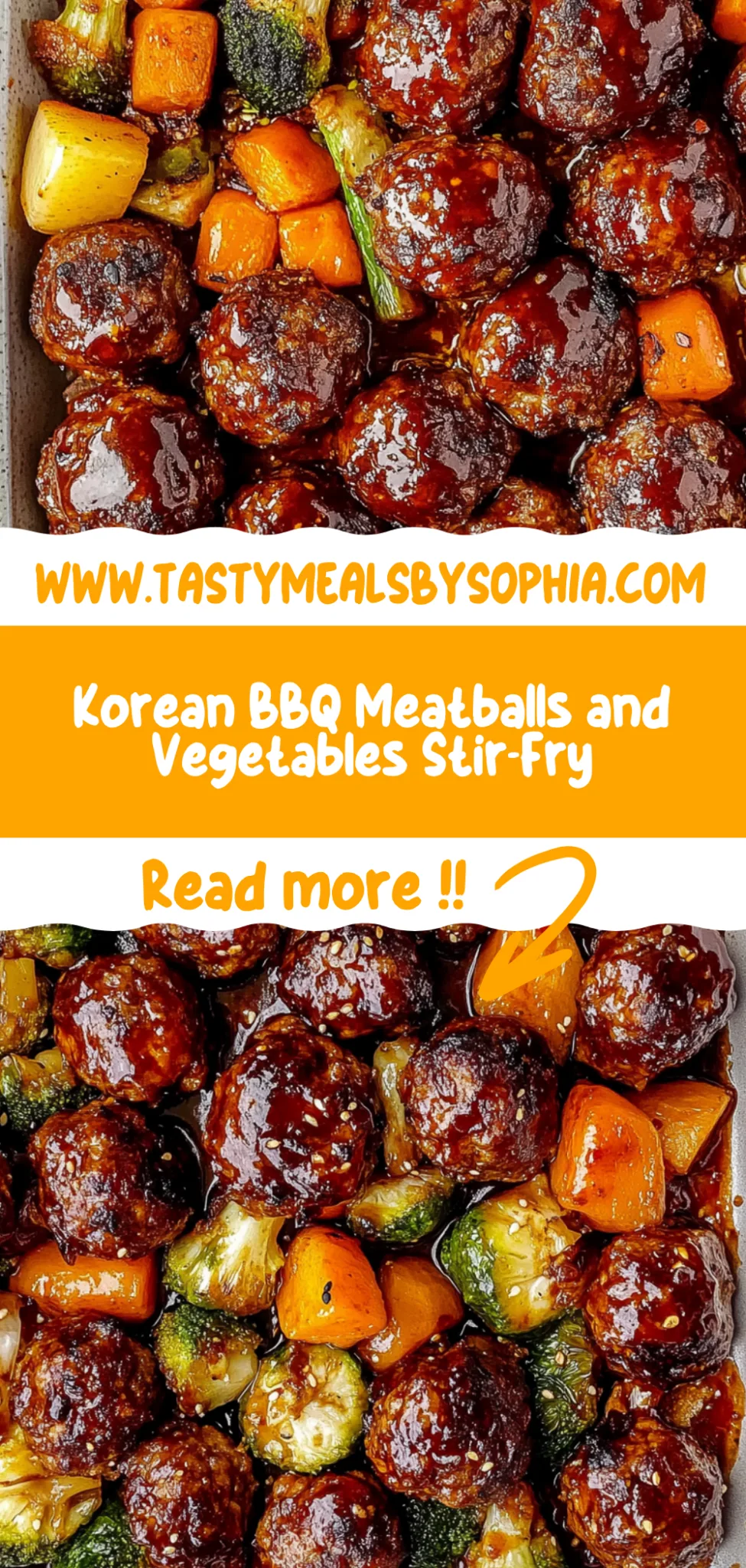
Are you ready to see how straightforward it is to make the Korean BBQ Meatballs and Vegetables of your dreams??
1. PREPARE THE MEATBALLS
Let’s start by getting those savory meatballs ready for baking!
1. Preheat – Preheat the oven to 400°F (200°C). This step is crucial as it ensures that the meatballs bake evenly and develop a lovely golden color on the outside while staying juicy inside.
2. Combine – In a mixing bowl, combine 1 pound of ground beef (or ground pork), 1/2 cup of bread crumbs (preferably panko), 1 large beaten egg, 2 tablespoons of low sodium soy sauce, 1 tablespoon of sesame oil, 2 cloves of minced garlic, 1 teaspoon of grated ginger, 1/4 cup of chopped green onions, and 1 teaspoon of black pepper. Mixing these ingredients together not only adds flavor but also helps bind the meatballs.
3. Form – Mix until well combined and form into 1-inch meatballs. You want them to be uniform in size for even cooking — this helps avoid any surprises with overcooked or undercooked meatballs!
4. Place – Place the meatballs on a baking sheet lined with parchment paper. This keeps them from sticking and makes clean-up a breeze!
HANDY TIPS
- Use wet hands when forming the meatballs; this prevents sticking and makes shaping easier.
- If you prefer smaller or larger meatballs, just adjust the baking time accordingly!
2. BAKE THE MEATBALLS
Now it’s time for some oven magic!
5. Bake – Bake the meatballs in the preheated oven for about 20 minutes or until cooked through (an internal temperature of 160°F/70°C). You’ll know they’re done when they are beautifully browned and firm to the touch.
HANDY TIPS
- For extra flavor, try adding chopped herbs like cilantro or parsley to your meat mixture!
- Ensure there’s enough space between the meatballs on the baking sheet so they don’t steam each other.
3. PREPARE THE VEGETABLES
While those meatballs are baking, let’s get those colorful veggies ready!
6. Heat – While the meatballs are baking, heat 2 tablespoons of olive oil in a skillet over medium heat. This will create a nice base for sautéing.
7. Sauté – Add 1 cup each of sliced bell pepper, zucchini, and carrots to the skillet. Season with 1 teaspoon of salt and 1 teaspoon of pepper. Sauté for about 5-7 minutes until tender but still vibrant in color — you want them to retain some crunch for texture!
HANDY TIPS
- Feel free to mix up your veggies! Broccoli or snap peas would also be delicious in this dish.
- Don’t overcrowd the pan; if necessary, sauté in batches for better caramelization.
4. MAKE THE BBQ SAUCE
Let’s whip up that irresistible Korean BBQ sauce!
8. Combine – In a small saucepan, combine 1/2 cup of low sodium soy sauce, 1/4 cup of brown sugar, 2 tablespoons of gochujang (Korean chili paste), 1 tablespoon of rice vinegar, 1 teaspoon of sesame oil, 1 clove of minced garlic, and 1 teaspoon of grated ginger.
9. Simmer – Simmer over low heat for about 5 minutes, stirring until the sugar dissolves and the sauce slightly thickens. The aroma will fill your kitchen — it’s mouthwatering!
HANDY TIPS
- Adjust the spice level by adding more or less gochujang based on your preference.
- This sauce can double as a marinade if you’d like to prepare it ahead for grilling!
5. SERVE
The grand finale is here!
10. Toss – Once the meatballs are done baking, toss them in the Korean BBQ sauce until evenly coated.
11. Serve – Serve your delicious Korean BBQ meatballs alongside those sautéed vegetables for a bright and flavorful meal that’s sure to impress!
What an incredible journey from raw ingredients to a vibrant family meal! These Korean BBQ Meatballs and Vegetables are not only easy to make but also packed with flavors that will have everyone asking for seconds! Make these once, and I wager they will invade your dreams every night too! – Nagi x
FAQ – Korean BBQ Meatballs and Vegetables
❄️ How long will these meatballs keep in the fridge?
Cooked Korean BBQ meatballs can be stored in the fridge for up to 3-4 days. I recommend keeping them in an airtight container to maintain their flavor and prevent drying out. After about 3 days, they’re still quite good, but I’d say they’re about 90% as delicious as when freshly made. By day 4, you might find them at around 80% quality, so it’s best to enjoy them before that!
⏳ Can I skip resting the meatballs after baking?
No, you really shouldn’t skip resting the meatballs! Resting allows the juices to redistribute within each meatball, making them juicier and more flavorful. If you cut into them right away, those delicious juices will run out, leaving you with drier meatballs. I usually let mine rest for 5 minutes after taking them out of the oven—trust me, it’s worth it!
❄️ Can I freeze these meatballs for later?
Absolutely! You can freeze the uncooked or cooked meatballs. For uncooked meatballs, place them on a baking sheet lined with parchment paper and freeze until solid, then transfer to a freezer bag or container for up to 3 months. If freezing cooked meatballs, allow them to cool completely first, then store in an airtight container. When ready to eat, thaw overnight in the fridge and reheat in the oven at 350°F (175°C) until warmed through.
🌾 Are these Korean BBQ meatballs gluten-free?
You can definitely make these gluten-free! Just substitute regular bread crumbs with gluten-free panko or any gluten-free bread crumb alternative. Ensure your soy sauce is labeled gluten-free as well; many brands offer this option nowadays. Other than that, all other ingredients are naturally gluten-free!
🍭 Can I reduce the sugar in the BBQ sauce?
Nope! Reducing sugar will significantly alter the balance of flavors. I’ve tried cutting back on sugar multiple times and found that even reducing it by just a tablespoon makes the sauce taste off—so sad! The brown sugar helps caramelize and creates that signature sweet-savory flavor that pairs perfectly with the gochujang.
🤔 Why do I need to use panko breadcrumbs instead of regular ones?
Panko breadcrumbs provide a lighter, crispier texture compared to regular breadcrumbs due to their larger flakes. This results in meatballs that are not only tender inside but also have a nice crunch on the outside when baked. If you can’t find panko, you can use regular bread crumbs—but they won’t give quite the same satisfying texture.
🔄 What can I add for extra flavor or customization?
There are plenty of ways to customize these meatballs! You could incorporate finely chopped carrots or even add some sesame seeds into the mixture for extra crunch. For spice lovers, try adding more gochujang or even a dash of crushed red pepper flakes to both the meatball mix and BBQ sauce for an extra kick! Play around with your favorite herbs too—fresh cilantro or parsley could work wonderfully!
Troubleshooting
I will continue to add more to this Troubleshooting section as I start seeing questions coming through from people who have made the recipe.
Troubleshooting tips
“My meatballs came out too dry! 😢”
- One common cause of dry meatballs is overmixing the meat mixture. When you mix the ground beef, bread crumbs, and egg too much, it can lead to a dense texture that lacks moisture.
- Another reason could be baking them too long; if you exceed the 20 minutes or they aren’t at the correct internal temperature (160°F/70°C), they can dry out quickly.
I bet they were still YUM though!
“My meatballs flattened out while baking! 😱”
- If your meatballs are flattening, it might be because you didn’t form them tightly enough before placing them on the baking sheet. They should be compact and well-formed to hold their shape.
- Additionally, if your ground beef is too lean, it may not have enough fat to help them maintain their shape while cooking. Aim for ground beef with a higher fat content, like 80/20.
I bet they were still YUM though!
“The color of my meatballs is uneven! 🤔”
- Uneven coloring can occur if your meatballs are too close together on the baking sheet, preventing proper heat circulation. Make sure to space them out adequately on the parchment paper.
- Also, if your oven isn’t evenly calibrated or doesn’t reach the right temperature (400°F/200°C), it may cause inconsistent browning. Consider using an oven thermometer for accuracy!
I bet they were still YUM though!
“My sauce was way too salty! 😳”
- If you find your sauce overly salty, it’s likely due to using regular soy sauce instead of low sodium soy sauce as specified in the recipe. Low-sodium soy sauce helps control the saltiness without sacrificing flavor.
- You might also want to check how much soy sauce you added; sometimes measuring mistakes happen! A quick taste test before serving could save you from a salty surprise next time.
I bet they were still YUM though!